


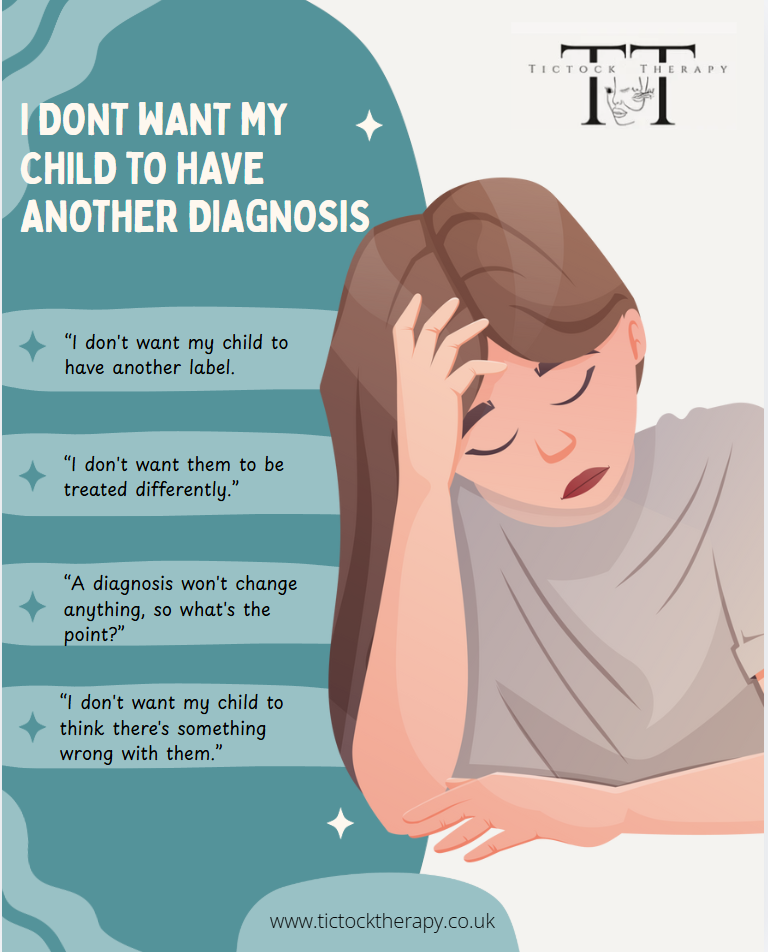
I don't want my child to have another diagnosis

The Tics Are the Fire, But What Is Fuelling Them?
Why exploring co-occurring neurodivergence can be an important part of understanding and managing tic disorders.
“I don't want my child to have another label.”
Throughout my work supporting children, young people and adults with tic disorders and Tourette Syndrome, I have heard this statement many times.
Sometimes a parent is happy to acknowledge their child's tics but becomes hesitant when conversations turn towards ADHD, autism or other neurodevelopmental differences.
Sometimes they recognise the traits themselves but don't see the benefit of pursuing a formal assessment.
And sometimes they are worried that another diagnosis will somehow make things worse.
I understand where these concerns come from.
Parents worry about stigma, discrimination, how their child will be perceived and whether a diagnosis will follow them throughout their life.
But there is something I wish more parents understood.
Not exploring a child's neurodevelopmental differences doesn't mean those differences disappear. It simply means the child may have to navigate them without fully understanding why certain things are so difficult.
And when we're talking about children with tic disorders, that lack of understanding can have consequences far beyond the tics themselves.
The tics are the fire. But what is adding the petrol?

One of the ways I explain tic management to families is by using the analogy of a fire.
Imagine your child's tics are the flames.
Naturally, when parents see those flames, they want to put them out.
They seek support, explore behavioural interventions such as Comprehensive Behavioural Intervention for Tics (CBIT), and look for ways to reduce the impact of the tics on their child's everyday life.
All of this can be incredibly valuable.
But what if we are focusing so heavily on the flames that we haven't noticed what's feeding them?
What if the child is also experiencing:
Undiagnosed ADHD, with difficulties regulating attention, impulses, emotions or activity levels.
Unrecognised autism, with sensory sensitivities, social communication differences or a significant need for predictability.
Anxiety associated with trying to navigate environments that feel overwhelming.
Masking, where the child spends much of their day hiding their difficulties to fit in.
Executive functioning difficulties that make seemingly simple everyday expectations exhausting.
Constant pressure to meet demands that exceed their current capacity.
These experiences can create substantial stress, frustration and emotional exhaustion.
And although stress does not cause Tourette Syndrome, it can influence tic frequency, intensity and the distress associated with tics.
The tics may be the fire, but unmet needs can become the petrol that keeps it burning.
Importantly, not every child has these co-occurring difficulties, and not every increase in tics is explained by them. Tics naturally wax and wane, sometimes without an identifiable trigger. However, when wider needs are present, addressing them can be an important part of supporting the whole child.
Tourette Syndrome rarely exists in isolation

Tourette Syndrome and other persistent tic disorders frequently co-occur with additional neurodevelopmental and mental health conditions.
ADHD and OCD are particularly common, while autistic traits, anxiety, learning difficulties, sensory processing differences and emotional regulation challenges may also be present.
This matters because sometimes the difficulties causing the greatest impact on a child's daily life are not the tics themselves.
A child may have relatively manageable tics but experience significant distress because they cannot tolerate the sensory environment of their classroom.
Another child may have ADHD-related executive functioning difficulties, leaving them constantly criticised for forgetting instructions, losing belongings or struggling to complete tasks.
Another may spend the entire school day masking their autistic traits, suppressing tics where possible and trying desperately to meet social expectations.
By the time they arrive home, they are completely overwhelmed.
Parents may then notice increased tics, emotional outbursts, irritability, withdrawal or an apparent inability to cope with everyday demands. Without understanding the wider neurodevelopmental picture, these behaviours can easily be misunderstood.
A child may be described as naughty, difficult, defiant, lazy or overly sensitive.
But what if they are actually overwhelmed?
What if they have spent years trying to function in an environment that doesn't accommodate their needs? And what if identifying those needs could change the way everyone responds to them?
Why tic management needs to look beyond the tics

CBIT is an evidence-based behavioural treatment that can help people manage bothersome tics.
However, good tic management should never be limited to simply identifying a tic and teaching a competing response.
We also need to understand the individual experiencing those tics.
For example, imagine a child with Tourette Syndrome and unrecognised ADHD.
They struggle to remain seated, have difficulty maintaining attention, become frustrated when tasks are repetitive and regularly receive negative feedback about their behaviour.
Over time, their school day becomes increasingly stressful. Their anxiety increases, their self-esteem declines and their tics may become more troublesome during periods of overload.
We could focus exclusively on their tic management.
But unless we also recognise and address the ADHD-related difficulties, that child may continue experiencing the very pressures contributing to their distress.
Now imagine that ADHD is identified and understood. Their parents begin recognising executive functioning difficulties rather than assuming a lack of effort.
Their school introduces appropriate adjustments. Expectations become more realistic.
The child learns strategies that work with their brain rather than constantly fighting against it.
Their daily stress may reduce and with that, some of the factors that were aggravating their tics may also reduce.
Identifying co-occurring neurodivergence is not a cure for tics. It is about creating an environment in which the child is better understood, better supported and less overwhelmed.
That distinction is important.
“But I don't want them labelled.”

This is perhaps the concern I hear most frequently.
And my response is often to ask parents to consider something.
If your child doesn't receive a diagnosis, does that mean they stop experiencing the difficulties associated with it?
Of course not.
An autistic child is still autistic without a diagnosis.
A child with ADHD still experiences ADHD-related differences, whether those differences have been formally recognised or not.
The absence of a diagnosis does not remove the challenges.
It may simply remove an explanation for them and without that explanation, children can create their own.
They may decide they are stupid because learning feels harder.
They may believe they are naughty because they are constantly being corrected.
They may think they are unlikeable because friendships are difficult to navigate.
They may believe they are weak because everyone else seems able to cope with things that overwhelm them.
Over time, these beliefs can become deeply embedded in their sense of identity.
A diagnosis, when appropriately assessed and explained, can offer a different narrative.
I'm not lazy. My executive functioning works differently.
I'm not deliberately difficult. Some demands genuinely overwhelm me.
I'm not strange for experiencing the world differently.
There is a reason certain things are harder for me, and there are ways I can be supported.
A diagnosis does not automatically create self-acceptance, but it can provide a foundation for understanding and that understanding can be incredibly powerful.
The adults who wish someone had noticed
One of the most significant influences on my perspective comes from working with young adults and older adults who are exploring their neurodivergence later in life.
I have lost count of the number of times someone has expressed sadness, frustration or even grief that their difficulties were not recognised during childhood.
They describe years of feeling different without understanding why.
Years of being criticised for things they struggled to control.
Years of anxiety, low self-esteem, social difficulties and exhaustion.
Some describe spending their entire childhood trying to become the person everyone expected them to be.
Others explain that they always knew something was different but assumed the problem was simply them and when they finally receive an explanation, there can be an enormous sense of relief.
But that relief can sit alongside grief.
Grief for the child who struggled.
Grief for the opportunities they missed.
Grief for the years they spent believing they were somehow inadequate.
In my own clinical experience, I have never had an adult tell me they wished their parents had not pursued a neurodevelopmental diagnosis.
What I have heard, repeatedly, is that they wish someone had recognised their differences sooner.
Of course, experiences of diagnosis are individual. Some people have had difficult or stigmatising experiences, and others do not find a formal diagnosis necessary or helpful.
But the recurring message from so many of the adults I work with is clear:
“I wish I had understood myself when I was younger, so I don't have to spend my adult life trying to put back together my broken inner child"
I was one of those children
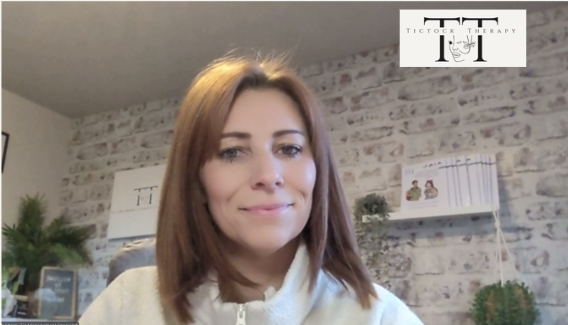
This subject is particularly personal to me because I received my own ADHD diagnosis at 37.
And I can genuinely say that understanding my ADHD changed my life.
Looking back now, the signs were there throughout my childhood.
Even my school reports reflected difficulties that, with the knowledge I have today, are recognisable as ADHD-related traits.
But nobody identified them.
Nobody explored why I struggled with certain things.
And nobody offered the kind of support that might have helped me understand myself.
Instead, I spent much of my teenage years, twenties and early thirties experiencing crippling anxiety. For years, I didn't understand why certain aspects of life felt so much harder than they appeared to be for other people.
I didn't understand why my brain worked the way it did.
I didn't have the language to explain my experiences, let alone the knowledge to recognise what support might help.
Receiving my diagnosis didn't suddenly change who I was.
But it changed how I understood myself.
It helped me recognise patterns in my life that had previously made little sense.
It allowed me to stop viewing certain difficulties as personal failures and begin understanding them through the lens of ADHD.
And it helped me recognise how much of my anxiety had been connected to years of living with unrecognised and unsupported difficulties.
I cannot say with certainty that an earlier diagnosis would have prevented all of that anxiety. But I strongly believe that earlier recognition, understanding and appropriate support could have made a significant difference.
I didn't need to become a different person. I needed someone to understand the person I already was.
And that is something I wish every child had the opportunity to experience.
A diagnosis doesn't have to change anything you don't want it to

Another important misconception is that receiving a diagnosis means a child's entire life must suddenly revolve around it.
It doesn't.
Your child does not become a different person when a clinician confirms that they are autistic or have ADHD.
They are exactly the same child they were the day before.
They have the same personality, interests, humour, strengths and individuality.
They don't suddenly have to tell every person they meet.
They don't have to wear a neon sign on their forehead announcing their diagnosis.
And they don't have to make their diagnosis their entire identity.
A diagnosis is information.
Information that can help families make informed decisions.
Information that can help a child understand their experiences.
Information that may help professionals identify appropriate support.
Information that can help schools and other environments understand the adjustments that may be beneficial.
In many circumstances, families can decide how widely they share diagnostic information, although there are situations where disclosure is necessary or relevant, and older children should increasingly be involved in decisions about their own information.
There is also an important distinction between having a diagnosis and having to use every service or intervention associated with it. A diagnosis does not automatically mean medication.
It does not mean a child must attend specialist provision.
It does not mean they are incapable of achieving their goals.
It simply offers an additional understanding of their needs and, potentially, more options.
But do we always need a formal diagnosis?
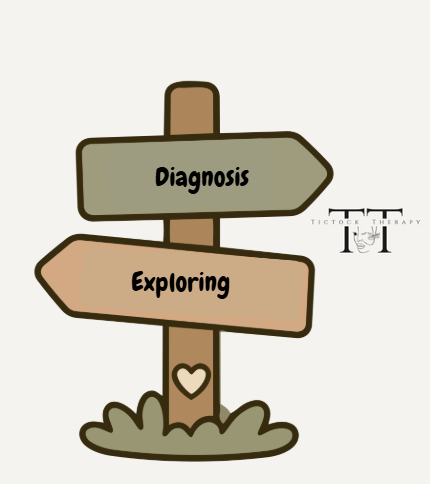
Not necessarily.
And I think this is an important point to acknowledge.
Not every child who displays neurodivergent traits requires a formal diagnostic assessment.
Some families are already recognising their child's needs, making appropriate adjustments and providing effective support without a diagnosis.
In many settings, support should be based on identified needs rather than being dependent on a diagnostic label.
However, there is a difference between choosing not to pursue an assessment because a child's needs are understood and supported, and refusing to explore the possibility of neurodivergence because of a fear of labels.
The goal should never be to collect diagnoses. The goal should be to understand the child.
If a child is struggling with anxiety, sensory overload, emotional regulation, attention, learning or social demands, those difficulties deserve to be explored.
Sometimes that exploration leads to a diagnosis.
Sometimes it identifies needs that can be supported without one.
And sometimes it reveals that something else entirely is contributing to the child's difficulties.
The important thing is that we remain curious rather than dismissive.
Understanding your child today can influence how they understand themselves tomorrow

When parents are reluctant to explore an additional diagnosis, I often encourage them to consider the long-term picture.
We naturally focus on what is happening right now.
The tics.
The school difficulties.
The anxiety.
The emotional outbursts.
The challenges getting through each day.
But the child experiencing these difficulties today will eventually become an adult.
And that adult will carry with them the understanding they developed about themselves throughout childhood.
Will they grow up believing that their difficulties were character flaws?
Will they spend years wondering why they never quite fitted in?
Will they look back and wish someone had recognised what was happening?
Or will they grow up with the knowledge that their brain works differently, that their needs are valid and that asking for support is not a sign of weakness?
A diagnosis alone cannot guarantee a positive outcome.
But appropriate recognition, compassionate explanations and meaningful support can help children develop a healthier understanding of themselves.
My message to parents

If your child has a tic disorder or Tourette Syndrome and you suspect there may be additional neurodevelopmental differences, please don't be afraid to explore them.
You don't have to rush into an assessment.
You don't have to agree with every suggestion made by a professional.
And you certainly don't have to define your child by a diagnosis.
But please remain open to understanding the bigger picture.
Because sometimes the child we are trying so desperately to help with their tics is also struggling with a whole collection of difficulties that have never been properly recognised.
Sometimes the anxiety is not simply anxiety.
Sometimes the behaviour is not simply behaviour.
Sometimes the exhaustion, irritability and emotional overwhelm are signs that a child is working incredibly hard to cope with an environment that does not meet their needs.
And sometimes, identifying those needs can transform how that child is supported.
We cannot always remove the fire of tics. But we can look carefully at what may be fuelling it.
We can reduce unnecessary pressures.
We can recognise sensory needs.
We can support executive functioning.
We can accommodate neurodevelopmental differences.
We can help children understand their own brains.
And perhaps most importantly, we can help them grow up knowing that they were never the problem.
They were children who deserved to be understood.
A diagnosis doesn't change who your child is. But understanding their needs could change how they experience the world.
Sarah Sharp
TicTock Therapy & Coaching Ltd
Specialist support for tic disorders, Tourette Syndrome and associated neurodevelopmental needs.

Comments